
Online banking has become the default for a growing share of account holders. The advantages — higher yields, lower fees, better apps — are real. So are the limitations. Here’s an honest comparison of what you gain and what you give up.
The Core Advantage: Lower Costs, Higher Yields
Online banks don’t maintain branch networks. Without those overhead costs, they can pass savings to customers through higher interest rates on savings accounts and fewer fees on checking. High-yield savings accounts at online banks currently pay substantially more than the national average at traditional banks. The gap narrows and widens with rate cycles, but online banks have consistently offered better rates on deposit accounts.
On fees: many online banks and fintech accounts charge no monthly maintenance fees, no minimum balance fees, and reimburse ATM charges. Traditional banks can and do offer similar fee structures, but it’s more common to find those conditions at online-only institutions.
Accessibility and Convenience
Routing transactions, paying bills, depositing checks via mobile, transferring between accounts — all of these work fine or better at online banks. Mobile apps from online-focused institutions like Ally, Marcus, or SoFi are frequently rated higher than those from large traditional banks.
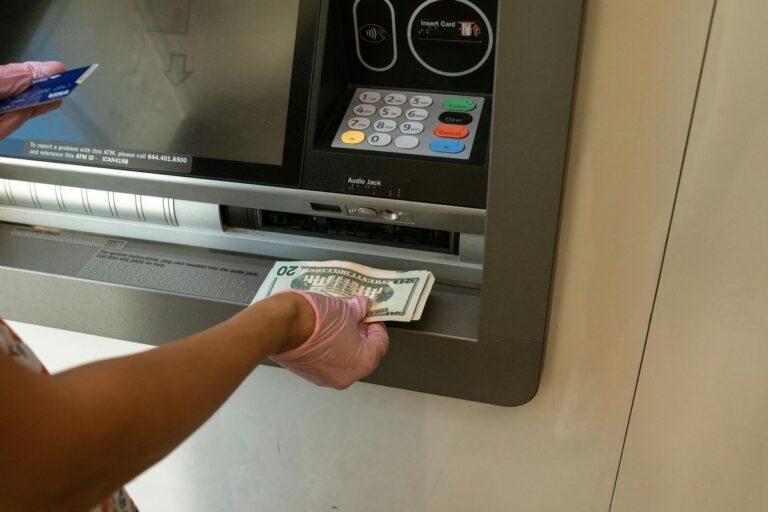
The convenience gap is most apparent when you need cash. Online banks rely on ATM networks (Allpoint, MoneyPass) for fee-free cash access. If your daily routine takes you near network ATMs, this isn’t a problem. If you’re in areas with limited ATM presence or you frequently need to make cash deposits, the friction is real.
Cash Deposits: The Main Limitation
Depositing cash is genuinely harder with online-only banks. Common workarounds:
- Deposit cash at a retail partner (some online banks partner with Walmart, Walgreens, or 7-Eleven for cash deposits, sometimes with a fee)
- Purchase a money order with cash and mail or mobile deposit it
- Keep a traditional account for cash handling; use the online bank for savings and primary transactions
If you handle significant cash regularly — freelancers paid in cash, small business owners — online-only banking alone is impractical.
Customer Service Differences
Online banks offer phone support, chat, and email. Response times and quality vary significantly by institution. Some online banks have built strong service reputations; others have frustrated customers with long hold times or scripted responses.
Traditional banks with branches offer face-to-face resolution for complex issues — disputed transactions, account access problems, document requirements. That option has value for people who prefer it or encounter unusual situations.
FDIC Coverage Is the Same
Online banks that are FDIC members provide the same $250,000 deposit insurance as any traditional bank. The digital-only format doesn’t affect this. Always verify an institution is FDIC-insured before depositing — the FDIC website has a search tool for this.
Traditional Banks: Stability and Services
Established traditional banks offer mortgage lending, auto loans, investment accounts, business banking, safe deposit boxes, cashier’s checks, and notary services — often under one roof. The relationship value matters when you need financing: having existing deposit accounts at a bank can smooth the process for loans.
Community banks and credit unions offer the branch network and relationship banking advantages of traditional institutions, often with better rates and lower fees than large national banks.
Hybrid Accounts
Many traditional banks now offer competitive online banking features. Many online banks have built ATM partnerships and retail cash networks. The gap between the two categories is narrowing. A large traditional bank’s online account may now offer comparable yields and fee structures to a standalone online bank, especially with the right conditions met.
A Practical Setup for Most People
A common and effective approach: use an online high-yield savings account for your emergency fund and savings goals (better rates), and keep a traditional account for any cash handling needs, certified checks, or in-person banking services. Most people find this combination eliminates the main limitations of online banking while keeping the yield advantage.
There’s no rule requiring you to concentrate all banking at one institution. Accounts are free (or low-cost) to open, and moving money between institutions via ACH transfer is simple and usually free.
